
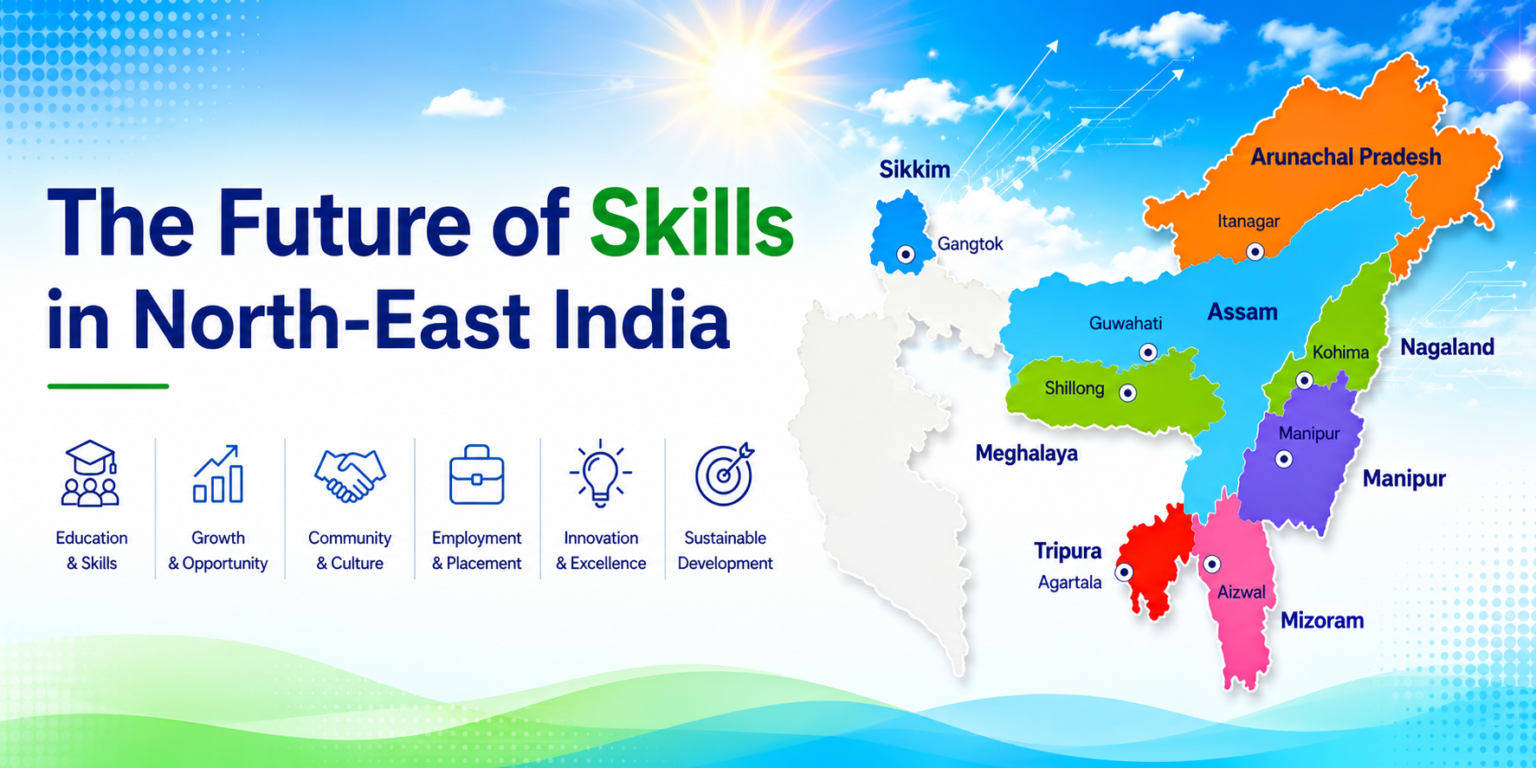
Niranjan Singh Lairenjam is the Founder and Group CEO of JCRE Skill Solutions, an NSDC-approved skill development organisation based in Imphal, Manipur, working across skilling, placement, and youth empowerment initiatives in North-East India and South-East Asia.
Why This Region Cannot Wait
For thirteen years, I have watched young people from Manipur and across the North-East walk into our training centres carrying two things at once: real talent, and real doubt about whether that talent has a place to land. That tension is the honest starting point for any conversation about skilling in this region. We are not short of ability. We are short of pathways.
As I look at where the region is headed, I keep returning to one belief: the North-East’s next decade will be defined not by how many people we train, but by how deliberately we connect training to demand — local, national, and increasingly, regional across South-East Asia.
We Have Outgrown the "Training Camp" Model
For a long time, skilling in the North-East was treated as a welfare exercise — short courses, certificates, and hope. That model served a purpose in its time, but it was never built to survive contact with a real labour market. Youth unemployment does not fall because more certificates are issued; it falls when a certificate reliably converts into a job, a business, or a next qualification.
The organisations that will matter most over the next five years are the ones that stop asking “how many people can we train” and start asking “what does the employer, the industry cluster, or the export market actually need, eighteen months from now.” That is a harder question. It requires labour market intelligence, employer partnerships, and the discipline to say no to courses that lead nowhere.
The Geography Is Changing in Our Favour
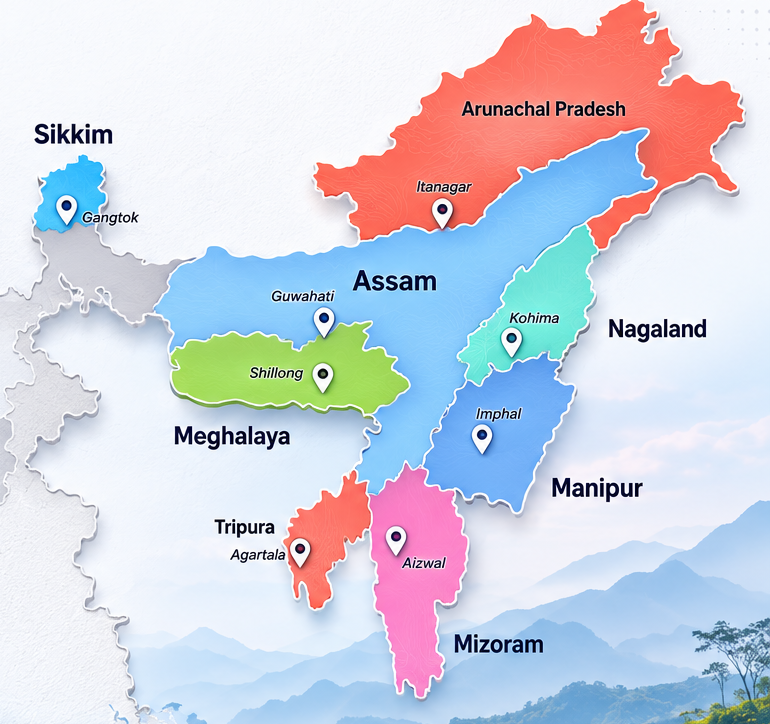
The North-East has spent decades being described as peripheral to India’s growth story. That description is becoming outdated, and skilling providers need to catch up with the change faster than the policy documents do.
Two shifts matter here. First, India’s Act East Policy has slowly repositioned the North-East from a frontier to a gateway — the physical and diplomatic bridge between India and South-East Asia. Second, infrastructure like the IT SEZ at Mantripukhri, Imphal signals, even if modestly for now, that Manipur can host knowledge-economy work, not just agriculture and handicrafts.
Neither shift automatically creates jobs. But together they change what “employable” should mean for a young person in Imphal, Manipur. It is no longer enough to train someone for the local retail or hospitality sector alone. We should be training people who can work in IT-enabled services, who can support businesses in Hanoi or Kuala Lumpur as easily as in Guwahati, and who see South-East Asia as a market next door rather than a distant abstraction.
This is not a theoretical position for us at JCRE. We are actively building skilling and business bridges into South-East Asian markets, because we believe the North-East’s long-term economic identity should be regional, not just national.
Skills That Will Matter Most
A few categories stand out as we plan the next phase of our curriculum and partnerships:
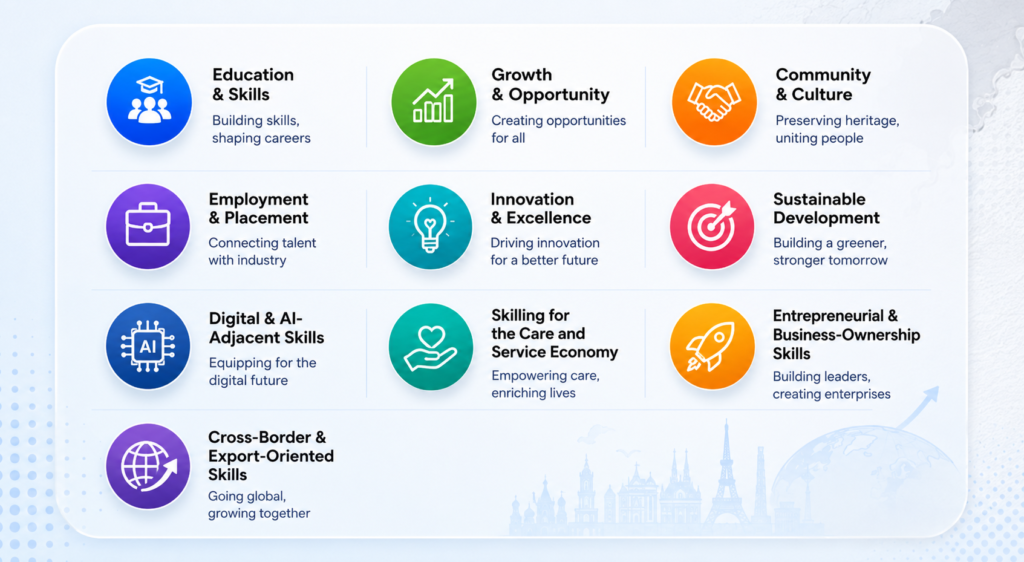
Digital and AI-adjacent skills, even at foundational levels — data entry with analytical judgement, AI-assisted content and design work, digital marketing, and basic automation literacy. These skills are location-independent, which matters enormously in a region where physical connectivity has historically limited opportunity.
Skilling for the Care and Service Economy, including healthcare support, hospitality, and retail — sectors that will keep growing as India’s middle class expands and as the North-East’s own tourism and services sector matures.
Entrepreneurial and Business-Ownership Skills, not just employability skills. A region with limited large-scale industrial employment needs a higher proportion of its trained youth becoming employers, not only employees. This is why placement services alone are not enough — we need incubation, mentorship, and access to capital sitting alongside training.
Cross-Border and Export-Oriented Skills — language, compliance, logistics, and remote collaboration capabilities that let North-Eastern talent serve clients and markets well beyond the region.
Skilling Cannot Be Separated from the Region's Realities
I would be doing a disservice to this conversation if I framed it purely in economic terms. Manipur, in particular, has lived through significant conflict and displacement in recent years, and any honest skilling strategy has to sit inside that reality rather than around it.
Displacement disrupts education and work in ways that standard skilling models are not designed for. Trust between communities, between youth and institutions, and between the region and the rest of the country has been tested. This is precisely why we believe skilling institutions in the North-East have a role that goes beyond curriculum delivery — we have a role in rebuilding pathways to normalcy, dignity, and economic participation for young people who have had a great deal taken from them.
It is also why initiatives like a regional youth leadership platform matter as much as any vocational course. Skills give people the means to participate in the economy. Leadership and reconciliation give them a reason to believe that participation is still possible. Both are necessary.
What Success Looks Like From Here

If we get this right, the North-East in the next decade should look like this: a region where a young person’s training is designed around verified employer demand rather than convenience; where a meaningful share of trained youth become entrepreneurs rather than job-seekers; where “digital work” is not something that happens elsewhere and gets described to us, but something young people from Imphal, Kohima, or Aizawl are doing directly for clients in Malaysia, Singapore, or Vietnam; and where skilling institutions are trusted partners in the region’s broader recovery and stability, not just training vendors passing through.
This is the direction we are building JCRE towards. It will not happen through good intentions alone — it requires sustained investment, honest measurement of outcomes, and a willingness to keep redesigning our courses as the region’s opportunities evolve. But I remain convinced that the North-East’s youth have never been the constraint. The systems around them have been. Our job, over the next phase, is to change that